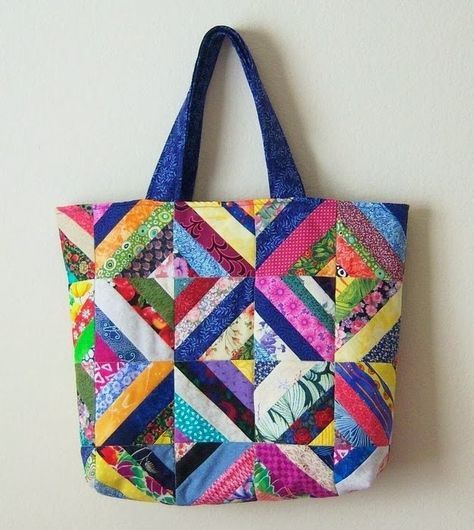
How to Sew a Diagonal Patchwork Cushion Cover
A patchwork cushion cover like this is a perfect small project that blends quilting techniques with home décor sewing, and it’s ideal for using up bright fabric scraps. The bold diagonal design creates movement and makes even simple cotton prints look dynamic and modern. Start by choosing 4–6 different fabrics that contrast well — mixing florals, polka dots, small prints, and solids works beautifully. Cotton quilting fabric is perfect because it’s easy to sew and holds shape well. Wash, dry, and press all fabrics before cutting so the finished cushion won’t shrink or wrinkle unevenly later.
Instead of cutting squares, this design uses fabric strips sewn into larger strip panels that are later cut on an angle. Begin by cutting strips about 6–8 cm (2½–3 inches) wide. Keep the width consistent so your seams line up cleanly, even if the strip lengths vary. Sew the strips together along their long edges, right sides facing, to create a wide striped panel. Press the seams in alternating directions to reduce bulk. Once the panel is large enough — bigger than your cushion front — place it on your cutting mat and use a ruler to cut diagonal sections at a 45-degree angle. These angled pieces will form the crisscross “X” pattern on the pillow.
Arrange the diagonal pieces on a flat surface to create the design before sewing. Rotate some strips so the direction of the lines changes and forms intersecting angles. Play with color placement — try not to cluster all the dark or bright fabrics in one area. When you’re happy with the layout, sew the angled pieces together in rows, matching edges carefully. Because the cuts are on the bias (diagonal), handle the fabric gently to avoid stretching. After sewing the rows, join them together to form one complete patchwork panel. Press everything well, then trim the panel into a neat square the size of your cushion insert, adding about 1.5 cm (½ inch) seam allowance all around.
To give the cushion cover more structure and a professional finish, you can quilt the patchwork panel lightly before assembly. Layer the patchwork top with a piece of batting and a backing fabric, then stitch along the seam lines or sew simple straight lines across the surface. This step stabilizes the bias edges and adds a soft, padded feel. Once quilted, trim again to your final cushion front size. Now your decorative front panel is ready.
For the back of the cushion, the easiest method is an envelope closure. Cut two rectangles from a coordinating fabric, each the same width as the cushion front and about two-thirds of the height. Hem one long edge of each piece by folding it under twice and stitching. Place the patchwork front right side up, then lay the back pieces on top, right sides down, overlapping in the center so they form the envelope opening. Pin all around the edges and sew around the entire perimeter with a straight stitch.
After sewing, trim the corners to reduce bulk, then turn the cushion cover right side out through the envelope opening. Use a blunt tool to gently push out the corners so they look crisp and square. Give the cover a good press, especially along the edges. Insert your cushion pad, adjust the back overlap, and admire your work. This cheerful diagonal patchwork cushion adds color, texture, and handmade personality to any sofa or bed — a small project with big visual impact.