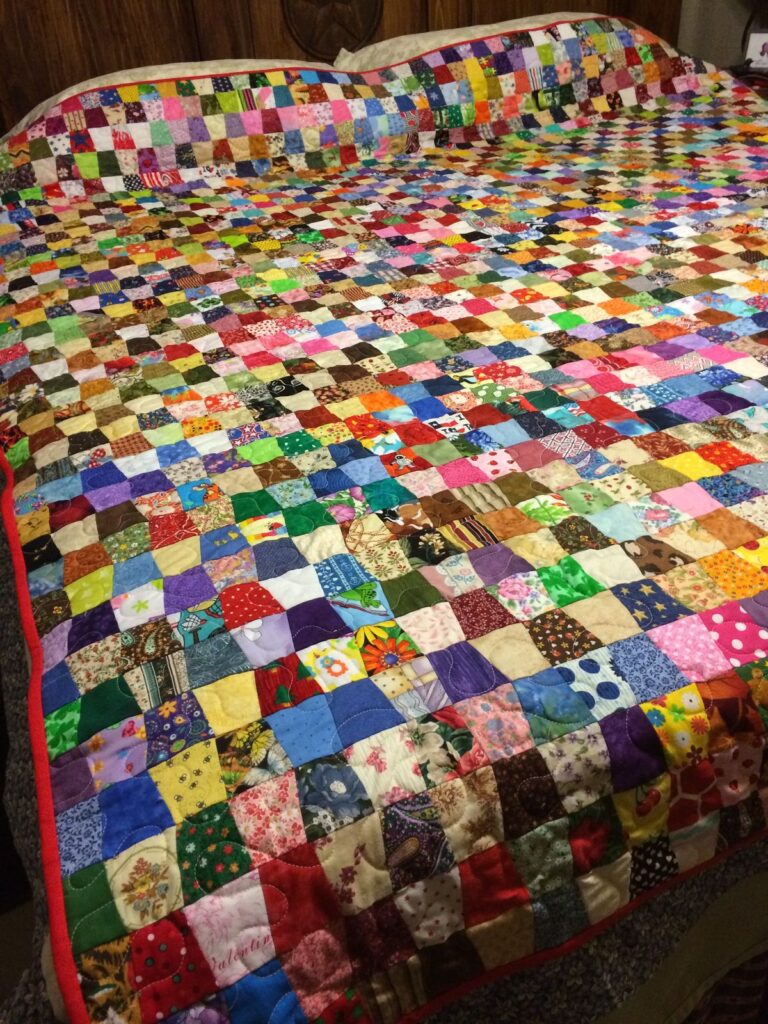
The Scrappy Patchwork Quilt is a timeless masterpiece that celebrates the art of sewing by turning small fabric remnants into a cohesive, warm, and beautiful heirloom. This specific project, featuring a vibrant grid of colors framed by a bold red border, is perfect for those who love a rustic yet organized aesthetic.
The Philosophy of Scrappy Quilting
In the world of quilting, “scrappy” doesn’t mean messy; it means diverse. By using dozens of different prints—from tiny florals to bold geometric patterns—you create a visual texture that a single-fabric quilt simply cannot match. This guide will walk you through the process of organizing chaos into a stunning “Postage Stamp” quilt.
Phase 1: Gathering Your Materials 🧵
Before you sit at your sewing machine, preparation is key to ensuring your quilt lasts for generations.
- Fabric Selection: Use 100% cotton scraps. Mixing different weights (like denim and silk) is not recommended for beginners as it makes the quilt uneven.
- The Power of Contrast: Ensure you have a mix of “lights,” “mediums,” and “darks”. This variety prevents the quilt from looking flat.
- Binding Fabric: For this design, a solid red binding is essential to “contain” the explosion of colors in the center.
- Essential Tools: You will need a rotary cutter for precision, a self-healing mat, and high-quality polyester or cotton thread.
Phase 2: Cutting with Precision
The secret to perfectly aligned corners is accurate cutting.
- Square Size: Cut your scraps into 2.5-inch squares.
- The Math: Once sewn with a standard 1/4 inch seam, each square will appear as a 2-inch finished block.
- Efficiency: Stack 4 to 6 layers of fabric to cut multiple squares at once, saving time during the preparation phase.
Phase 3: Mastering the Layout
Don’t rush into sewing! Spend time on your layout to avoid “clumping” colors.
- Distribution: Spread out your dark blue, bright red, and soft yellow patches so they don’t all end up in one corner.
- Photography Tip: Take a photo of your layout on your phone. Looking at the design through a screen helps you spot “holes” or color imbalances that your eyes might miss in person.
Phase 4: Step-by-Step Construction
- Chain Piecing: To save thread and time, sew pairs of squares together one after another without cutting the thread in between.
- Creating Strips: Join your pairs into rows. For a standard bed-sized quilt, you may need 30 to 40 squares per row.
- Ironing (Pressing): This is the most ignored but most important step. Press your seams flat to ensure the quilt top doesn’t become bulky.
- Joining Rows: Sew Row 1 to Row 2, then Row 3 to Row 4. Use pins at every intersection to keep the grid perfectly straight.
Phase 5: Finishing and Quilting Details
Once your top is complete, it’s time to turn it into a functional blanket.
- Basting: Secure the “quilt sandwich” (top, batting, and backing) using safety pins every 4 inches.
- Quilting Design: For this busy pattern, a “Meander” or “Stipple” stitch works best because it adds texture without competing with the colorful fabric prints.
- The Red Border: Attach your red binding using a double-fold method for extra durability on the edges.
Care and Maintenance
To keep your patchwork quilt looking new:
- Wash only when necessary in cold water on a delicate cycle.
- Use “color catcher” sheets in the wash to prevent the dark fabrics from bleeding into the lighter ones.
- Air dry flat if possible to prevent the batting from bunching.
Final Thoughts for Your Project
Creating a scrappy quilt is a journey through your own sewing history, as you see bits of past projects come together in a new way. We hope this guide inspires you to start your own My Free Patts masterpiece today!